In today’s digital-first marketing environment, the way that you nurture leads directly correlates to whether they will become buyers who will eventually become loyal customers. Nurturing leads is so much more than simply sending follow-up emails. It is about fostering relationships that will facilitate prospects as they move along the sales funnel. Here is where CRM automation is a game changer.
With automation tools, marketers can remove repetitive tasks from their daily routine, create personalized communication surrounding their leads, and engage with leads in a consistent manner without losing the human touch. Wouldn’t it be great if there was a system that tracked every click, interaction, and behavior of your leads, and allowed you to send the right message at the right moment? And that’s what CRM automation tools, particularly the workflows that you can create on a platform like HubSpot workflow offer.
As a marketing manager, or someone in a similar position, you can’t afford to have systems like this as a “nice to have” idea, it has to be a “must have” idea.
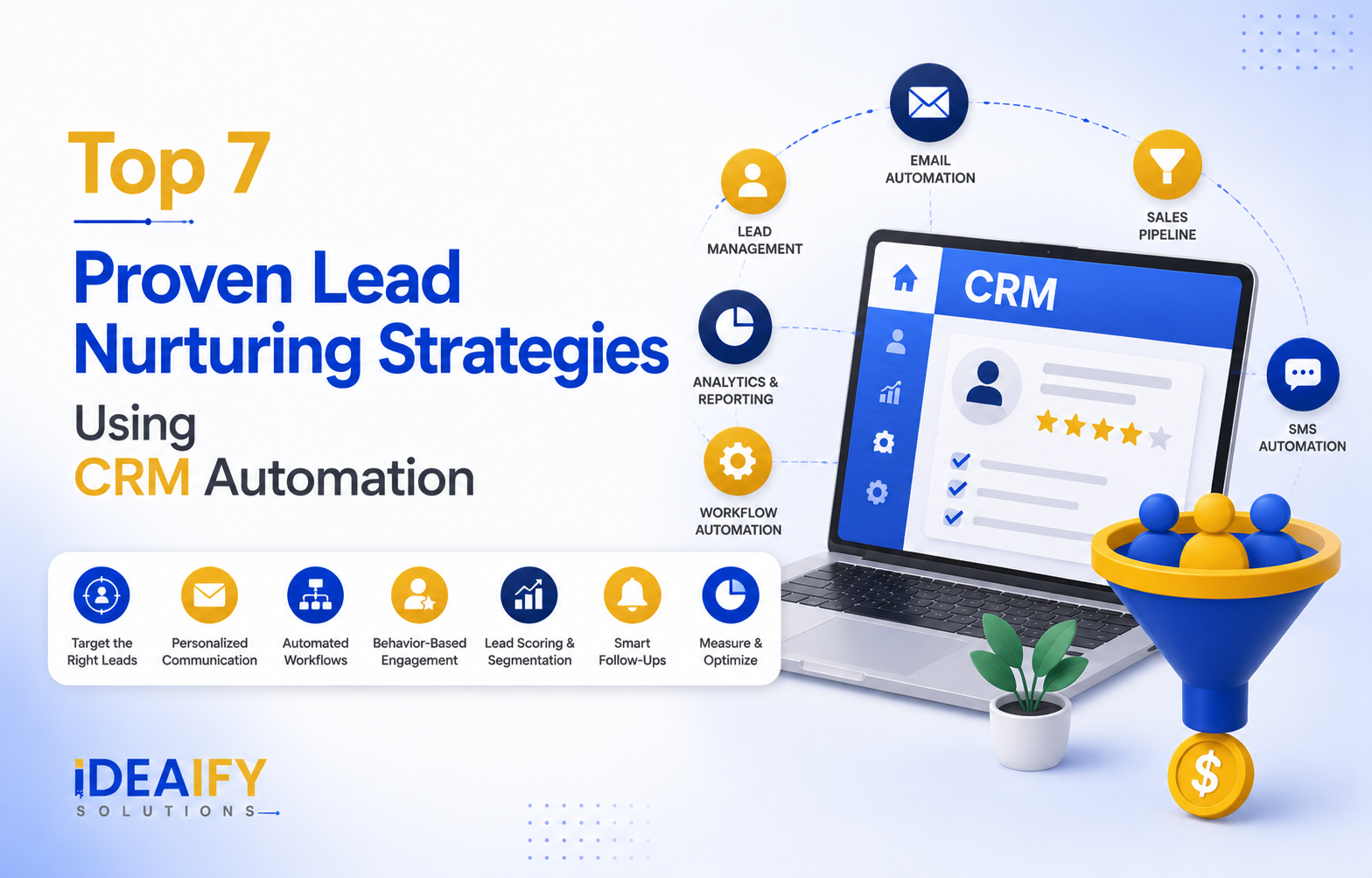
This article by Ideaify Solutions will outline 7 tested lead nurturing strategies used to turn potential leads into lifelong customers faster using CRM automation.
Understanding CRM Automation
CRM automation is fundamentally about making life easier and more efficient for your marketing and sales teams so they can more effectively manage customer relationships. Rather than spending your time keeping track of leads, adjusting contact lists, and sending follow-up emails, automation will take care of these steps for you without you even realizing it!
Today’s sophisticated CRMs, such as HubSpot, Salesforce, and Zoho, are no longer limited to providing basic contact management functionality. They can now track an individual lead’s activities across multiple channels, trigger personalized workflows, and score leads based on their actions and behaviors.
By using automation for these workflows, marketers use their time to ensure that nothing falls through the cracks and give the sales team more time to engage with leads and close sales. Automation can ensure that a sales rep sends a lead an automated “thank you” email for requesting a demo, or an automated sales follow-up email, all while keeping your entire team in sync with your communication and increasing the speed at which you convert leads to customers!
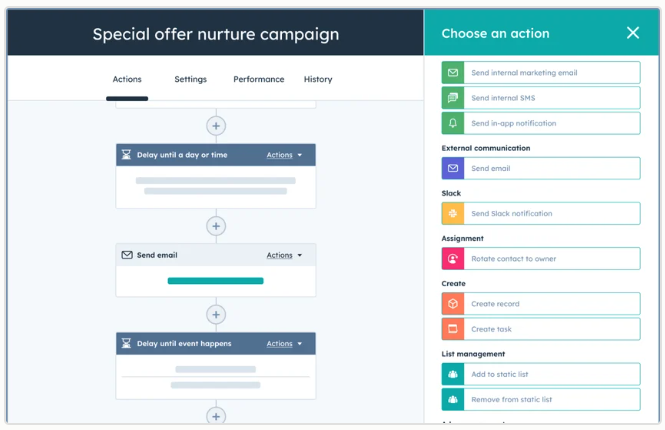
For instance, HubSpot workflows allow you to set up automated “if/then” sequences when a lead takes a certain action, such as watching a video on pricing for a product or downloading a whitepaper from the website. This creates an automated system to nurture leads across multiple channels 24 hours a day that also frees your agency’s resources to focus on other important tasks to elevate your agency’s strategic approach, creativity, and output.
Why Lead Nurturing Is Critical for Conversion Success?
Nurturing leads is crucial in moving prospects down the sales funnel and converting them to paying customers. It’s like planting a garden; you can’t just toss seeds of leads out and expect them to grow. You have to engage with them, educate them, and lead them through the buying cycle. With CRM automation and tools like HubSpot workflows, marketing managers can stay in front of their prospective customers by ensuring the right details, delivered at the right time, are in front of them, which will keep your leads warm and moving toward converting them to customers.
Research shows companies that do the best job at lead nurturing will result in 50 percent more sales-ready leads and a cost saving of 33 percent. Automated, streamlined workflows also ensure that no lead is left fallow in your business pipeline by initiating follow-up touch points with the right details at the right time. Lead nurturing builds trust and awareness of your brand, but also shortens the sales cycle, resulting in prospects making a faster, more confident buying decision.
Altogether, CRM automation allows your business to turn random interest into consistent conversions, transforming your marketing pipeline into a strong pipeline of profit-generating relationships.
Strategy #1: Segmenting Leads with CRM Data Intelligence
To nurture leads effectively, it starts with effective segmentation built on CRM automation. Marketing managers can use tools like HubSpot workflows or Salesforce to segment leads based on behavior, engagement, or demographics in order to provide more personalized communication.
For instance, a lead looking at pricing pages would potentially receive an automated follow-up with a case study or demo link. This data-based approach ensures the message is relevant and timely, increasing engagement and conversion rates.
Personalized segmentation helps nurture trust, lift open and click-through rates, and bring generic follow-up to meaningful engagements. Ultimately, it’s about using the intelligence of CRM data to strategically nurture leads and turn their perceived interest into relationships with customers.
Strategy #2: Personalizing Communication Through HubSpot Workflows
Effective lead nurturing is about personalization, and HubSpot workflows simplify personalization. By using CRM automation, marketing managers can personalize every interaction – from dynamic emails, personalized subject lines, to call-to-actions that are hyper-personalized.
For example, a lead downloads a resource like a “Beginner’s Guide to CRM Automation”. The marketing manager can then create a workflow that sends beginner-related follow-ups, video tutorials and invitations to related webinars.
Further, HubSpot can gather lead behavior on the website and provide Smart Content for lead experiences using HubSpot based on lead behavior (the resources section). This Smart Content section would create a personalized experience for lead, as it would just show the next learnings/resources or offers based on previous behavior.
All of this targeting and automation helps create trust in the brand and builds authority in the space. What started as generic follow-ups, is now personalization and meaningful content being delivered at the right time to the right person, optimizing leads valuably and driving higher conversions.
Strategy #3: Automated Email Campaigns for Lead Engagement
Automated email campaigns are an essential component of effective lead nurturing, and CRM automation is more powerful than it has ever been. Tools like HubSpot workflows, Salesforce, and ActiveCampaign allow marketing managers to design automated email sequences that efficiently guide leads through the sales funnel.
For example, a new contact who downloads an eBook can receive a structured series of emails consisting of a thank-you message, shared blog content, relevant case studies, and soft pitches for products, all while keeping your brand at the forefront of their minds and ultimately building trust.
Key factors of success are relevance i.e. strategic thought is applied toward adding value in every email; consistency i.e. no leads fall between the cracks; and optimization i.e. using analytics to evaluate subject line, content, and timing of email sends in order to maximize the effectiveness of the campaign.
The beauty of personalized automation is that every contact feels like they are being prioritized, and if content is relevant to the lead’s role, behavior, or interests it elevates the possibility of engagement. By deploying human-like personalization with the efficiency of automation, marketers can nurture leads with ease, shorten sales cycle time, and generate higher conversions.
Strategy #4: Lead Scoring and Qualification Using CRM Automation
Are you dealing with leads that will never convert? Lead scoring is an excellent solution to this problem. With CRM automation, you can score your leads by looking at their behavior, engagement, and demographics. Points are accumulated for a set of actions that demonstrate engagement, including (but not limited to) action items like opening an email, downloading a whitepaper, requesting a demo, etc.
Alternatively, points are dropped from lead scores when inaction takes place, including failing to respond to emails, and people who unsubscribe, etc. Using workflows in HubSpot or another tool, marketers can alert sales collections once the lead hits a specified score, or move the lead into a series of with-targeted lead nurturing campaigns.
In other words, optimized means marketing and sales teams are working on the best leads. Automated lead scoring not only helps organize the follow-up but also helps align marketing and sales teams, improves engagement, and increases conversions. It turns your nurturing strategy into a smarter, more targeted, automated, and highly effective process.
Strategy #5: Using Behavioral Triggers to Automate Follow-Ups
If you’ve ever wondered how leading brands seem to follow up at the precise right time, it’s because of behavioral triggers. CRM automation allows you to respond to lead behavior at the time of their behavior instead of having to manually follow up after each interaction. A behavioral trigger is simply an automatic response triggered by a lead’s behavior or in some cases, inaction. For example:
- If a person looks at your pricing page but doesn’t convert to either demo or buy, your CRM can automatically send an email, “Need help choosing?”
- If the person downloaded a free trial but didn’t do anything with it, after a few days, HubSpot could trigger a reminder with set up tips.
- If a lead opens three different emails about one product, your CRM can trigger a notice to the sales team to reach out.
Invalidated follow up creates responsiveness in real time. Responsiveness creates an attentive and proactive brand. It eliminates the wait time between an engagement and taking action which, on most occasions, is the difference between winning or losing a lead.
To effectively do this with behavioral triggers, first identify the most common lead behaviors that illustrate intent. Things like, visiting a demo page, clicking a CTA, or engaging in social media. Then build workflows in your CRM that trigger personalized emails based on signal behaviors.
What’s great about this approach? It adds the perfect balance of automation and empathy. This isn’t spam,this is all about providing prospects with exactly what they want, when they want it.
Behavioral trigger automation provides a consistent experience in the buyer’s journey and ensures that every single lead feels recognized and valued even when your team is sleeping.
Strategy #6: Multi-Channel Nurturing Through CRM Integration
Today’s buyers don’t only operate in one channel, they view your site, open your emails, scroll social media and engage in chat. To meet their expectations, marketers must adopt multi-channel nurturing and the best part is that CRM automation makes this simple. Using tools like email marketing, SMS messaging, social media and advertising, CRMs like HubSpot allow you to deliver a seamless customer experience.
Let’s say, a lead clicks a link in an email, visits your site, and then engages in a LinkedIn ad for your company, the CRM’s can see all of that action and follow up with each of the channels you had an interaction with. For example, after a lead downloads a resource guide, the CRM could follow up with a Facebook retargeting list and follow up with another email regarding a free consultation.
This method ensures your brand stays present at each customer engagement point without feeling redundant. Multi-channel nurturing means more than simply existing in multiple environments, it’s about ensuring the correct message is available in your audience’s preferred channel. In doing so, you will develop brand trust, obtain better conversions rates, and improve the customer journey from awareness to decision-making.
Strategy #7: Using Analytics to Continuously Optimize Workflows
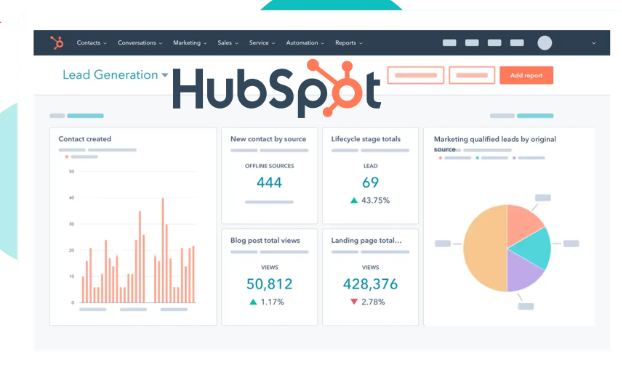
The power of CRM automation is in the data. Each touchpoint interaction for every email sent, each click and open rate is indicative of what’s working as well as what isn’t. With that insight is built-in analytic measurement tools within most CRMs, including HubSpot, that allow marketing managers to measure campaign performance as well as leverage automation to improve performance.
With your ongoing measurement and optimization of processes, you can be assured that your automation will become smarter over time. This kind of data-driven thinking leads to precision marketing and capitalizes on every chance to turn leads into customers.
Think about a lead who clicked an email link, visited your site, and then engaged with a LinkedIn ad. Your CRM will track each of those activities and initiate personalized engagement across platforms. For example, when a lead downloads a guide your CRM can add the lead to a Facebook retargeting list, as well as deploy a follow-up email offering a free consultation.
Aligning Sales and Marketing Through CRM Automation
A major obstacle in any organization is the disconnection of sales and marketing teams. But that’s a cycle that CRM automation can easily break. It creates a shared ecosystem wherein both teams can see the same data, track leads through the buyer journey, and efficiently collaborate. Whenever marketing uses automation tools like HubSpot workflows, they repeat themselves as needed only to automatically pass on qualified leads to sales teams after completing score values.
When sales and marketing teams operate in alignment there is less miscommunication and the transition of leads from marketing to sales doesn’t fall through the cracks. Marketing has visibility to see which leads are qualified/sales ready and sales knows they should prioritize conversations with those leads. Automated task assignments, notifications, and dashboards are additional features that compliment all of this and create reliability.
The end result will be quicker follow up times, improved handoffs, and a better experience for the customer. In other words, CRM automation doesn’t just automate marketing, it improves the overall revenue pipeline.
Common Mistakes to Avoid in Automated Lead Nurturing
While automation can be a mighty tool, it is easy to abuse. One major error is “over-automation,” where an organization sends too many messages in a short amount of time. This can make your brand come off like a robot rather than a human. Another mistake is ignoring analytics, if you are not measuring engagement, you do not know if you are engaging them or if they are converting at all and you are inputting data and flying blind.
Timing errors also happen frequently. Sending a sales pitch before a lead is ready to connect can completely develop a poor impression on that lead. You don’t want to be guiding yourself by timing; you should be timing, and action-driven workflows should be guiding you.
One final thing is do not forget personalization. The automated messages should still feel human, even your automated messages. Also, regularly testing your workflows will allow you to gain insight into both relevance and accuracy.
Avoiding these three missteps will ensure your CRM automations are building trust instead of fatigue.
The lead nurturing and generation services that Ideaify Solutions offers integrate all the above benefits. We operate as a seamless extension of your team to plan your nurturing strategy, develop the multi-touch campaigns, write all the content, and manage the execution and optimization. Our methodology is data-driven and personalized, the examples and best practices you have read about in this article are exactly the kind of tactics we implement on behalf of our clients every day.
Perhaps most importantly, we tie it all back to results. Our team carefully tracks the lead nurturing statistics that matter, conversion rates, response rates, pipeline created and we provide regular reports and insights. You will always know the ROI of your nurturing campaigns and where opportunities exist to improve. We are not just a service provider, we are a strategic partner committed to your sales growth.
So, are you ready to take your lead nurturing to the next level? Reach out to Ideaify Solutions to see how our team can create a customized lead nurturing campaign for your company, complete with successful tactics, appealing email templates, and real results. You can relax and let us take care of nurturing your leads while you focus on closing deals and running your business. It’s an investment in growth that pays for itself with more conversions and increased sales.