
It’s not easy to run a small business in 2025. You are juggling jobs, leading teams, talking to customers, and growing all at the same time. Where every minute and every dollar matters, waste isn’t annoying; it’s expensive.
It’s where automation comes in.
Business automation is no longer a luxury in 2025, but an absolute necessity for small and medium-sized businesses (SMEs) and online retail brands. The appropriate tools can remove repetitive tasks from your to-do list, help keep your staff in order, and optimize workflow.
It can be as basic as scheduling appointments, following up with emails, or handling sales leads, and the appropriate automation tools can make tasks quicker and easier, provided that the choice is made wisely.
Knowing where to start and what to look for can make all the difference.
In this article by Ideaify Solutions, you’ll learn about the automation tools for 2025 to work smarter in your business.
Most small businesses will pass up these opportunities. You won’t.
1. HubSpot: Comprehensive CRM and Marketing Automation
HubSpot comes equipped with functionalities that are a small business’s game-changer. Central to these are marketing automation functionalities, which help in reducing tasks and increasing marketing campaigns’ efficiency. The marketing automation functionalities enable companies to automate manual tasks, making efforts consistent as well as scalable.
Another crucial aspect is workflow automation. The software enables companies to set up a chain of actions automatically triggered by certain conditions. For instance, when a future customer submits a contact form, HubSpot can automatically reply with a welcome email, subscribe the customer to a newsletter, or alert a salesperson for a follow-up. Through the automation, no lead gets lost, and all the interactions are timely and customized.
It makes certain that no lead falls through the cracks and all the communications are timely and individualized
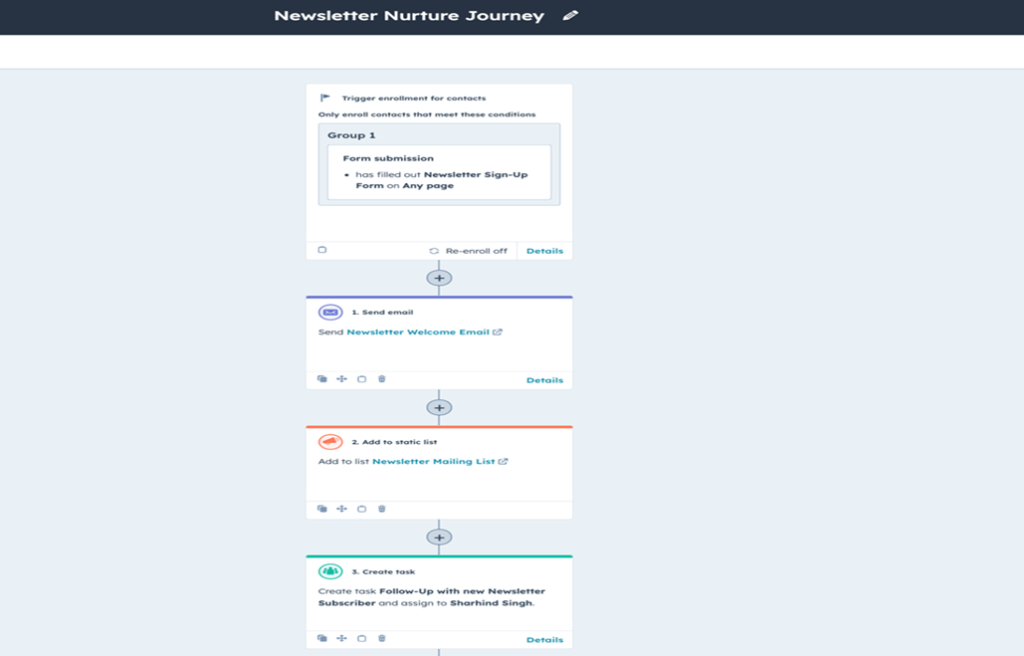
These tools are essential for small companies that lack the means to invest heavily. They save time while having a smaller marketing department, thereby allowing companies to run campaigns efficiently without feeling overwhelmed. Another useful feature is automated reporting, which provides information about how campaigns are faring by aggregating the information and providing easy-to-read dashboard summaries. This helps companies make the right decisions at the right time, streamlining marketing plans and sticking to what really works.
2. Zapier: Connecting Apps for Seamless Workflows
Zapier is an automation platform that connects apps, triggers actions, and synchronizes data, all without prompting users to write a line of code. There are minimal automations in the free account, and the paid plans remove restrictions. It empowers SMEs to automate tasks by integrating more than 5,000 apps without coding.
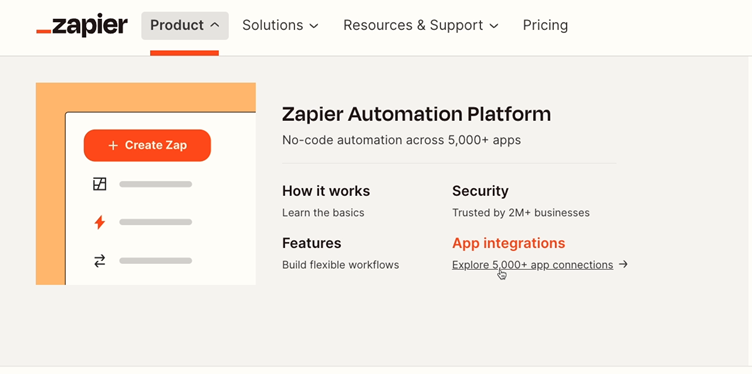
By connecting more than 5,000 applications, like Slack, Trello, Gmail, and more, Zapier helps automate actions like copying form submissions automatically to a spreadsheet or making contacts in a CRM. It can save hundreds of hours by reducing manual entry, so it’s no surprise that it’s loved by marketing agencies, online stores, and consultants seeking to automate things. The interface of Zapier is also simplified and easy to use, although creating more complex “Zaps” requires learning. Small companies that seek to slowly grow can truly benefit by employing the free plan of Zapier, although advanced automations typically mean paid subscriptions.
3. Project Management Automation with Trello and Asana
Structured project management is key to workflow optimization. Trello and Asana are among the most popular project management tools among companies that collaborate in an Agile and collaborative way daily or for temporary projects. Both online software programs are also frequently matched, as their way of project management is visual, fun, and cooperative.
Asana is more than run-of-the-mill project management software; it connects all the efforts that your business is undertaking to your top-level goals and business strategy. Through Asana, you really get a lot more than project management software, like Integrations to all the tools and systems that you love, so that your work remains streamlined in one place. Task automations, calendaring, assigning tasks, and much more, all in pursuit of saving the time that you waste in low-priority busywork.
Trello is a project management software that is of the Kanban-board format, owned by Atlassian. In Trello, there is nesting of project tasks under boards that are given an overarching label. You can, for instance, have a board that is labeled as “Not started,” “In Progress,” and “Complete.” The arrangement facilitates easy monitoring of project advancement.
4. E-commerce Automation with Shopify and WooCommerce
Both Shopify and WooCommerce provide high-level automation capabilities for online businesses that help in increasing sales, stock, and customer participation.
Shopify is a closed-source, proprietary e-commerce platform that comes equipped with the ability to run an online store, along with site administration, hosting, and the like.
Though WooCommerce is an open-source WordPress-specific e-commerce plugin. It has all the elements required to operate an online store, such as the display of products, payment collection, and delivery of products to customers.
Automation in e-commerce helps in maintaining streamlined operations as well as making the overall customer experience better.
5. Mailchimp: Automating Email Marketing and Customer Engagement
Mailchimp remains a base for automating emails so that SMEs can efficiently run campaigns. The platform has different automations that come with built-in triggers for daily tasks.
It can handle the subscriber queue and the sending of emails. Once an individual gets the initial email in an automation sequence, they’ll automatically get all the subsequent emails in the sequence, unless they opt out of the automation.
Once a business connects its store to Mailchimp, it can put its purchase data to use by creating automations that make it easy to communicate to and follow up with the customers, so it can drive more sales to its website or landing page and improve its bottom line.
6. Monday.com: Streamlined Team Collaboration
Monday.com is a robust collaboration and communication platform that allows teams to get more done. Designed for productivity and ease of use, Monday.com provides users with an end-to-end set of features that help them get organized, productive, and on target.
With a feature set created to facilitate effortless workflows, Monday.com gives teams an easy solution to:
- Manage tasks
- Keep track of deadlines
- Delegate duties
- Stay connected in real-time
Having the ability to merge collaboration and communication into one platform, Monday.com is capable of making SMEs transparent, accountable, and effective collaboration and SMEs become more effective, more transparent, and save time and resources in creating better workflow optimization.
7. Google Workspace: Automation for Daily Operations
Google Workspace automation employs tools to eradicate recurring admin work through automating user accounts, email settings, and enforcement of policies. It assists IT staff in saving time, minimizing mistakes, as well as boosting security since it is a foundation tool for SMEs that provides features for automating communication, data storage, as well as schedules. It assists in:
- Scheduling periodic reports.
- Automatically reply to emails.
- Updating spreadsheet files with outside data.
- User provisioning and user deprovisioning management.
- Triggers due to system events.
It automates common end-user tasks to increase productivity. Automate filters, labels, signatures, or give data access without going through IT on each occasion. Automation reduces friction and gives power to users from day one
8. AI Chatbots: Automating Customer Support
AI driven Chatbots are redefining customer service and fulfilling 24/7 promises of being able to provide instant, streamlined service across all digital touchpoints. SMEs as well as 24/7 e-commerce firms depend on them. Fed with artificial intelligence (AI) and natural language processing (NLP), advanced chatbots provide service with more than just FAQs, assistance with advanced questions, escalation of complex inquiries to human agents when necessary and personalization based on customer details.
Chatbots are scalable; therefore, organizations can handle high-volume customer issues without increasing staff proportionately, enabling organizations to grow without the added cost.
9. Accounting and Finance Automation
Contemporary SaaS applications frequently require the generation of invoices, payment application, and accounting data synchronization across several accounting systems. Solutions like QuickBooks, Xero, and FreshBooks ease the complexity of these tasks through their own separate objects, tax models, workflow definition, and APIs creating unnecessary friction for developers and finance teams alike.
These solutions alleviate those challenges. They attach themselves to the business’ accounting applications and provide normalized, real-time accounting objects (e.g. invoices, payments, tax rates, contacts) so that product users can issue, create, send, and reconcile without needing to write per vendor code.
10. Social Media Automation Tools
In 2025, keeping your brand’s social media presence and voice consistent is key. This is made easy by social media management tools like Buffer, Hootsuite, and Sprout Social, which can automate parts of the social media process and management.
Having been founded in 2010, Sprout Social has a wonderful reputation as leaders in social media management technology for well over 10 years.
Hootsuite provides different tools for every step of social media management from scheduling and publishing content through to engagement, customer care, and reporting and analytics.
Buffer has a free plan that allows you to publish and schedule up to 30 total posts (10 per channel). It also has a really intuitive calendar so you can see all your scheduled posts and drafts across all social channels in one glance, and you want to publish and schedule right from your calendar view in real-time.
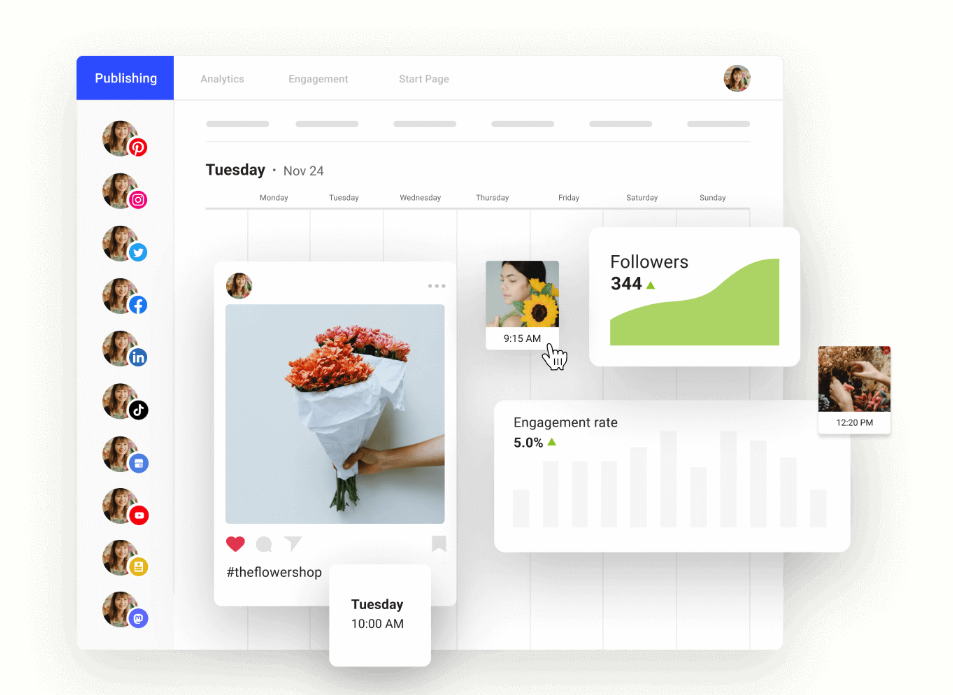
Collectively, using these apps for social media automation will ensure that your brand is still visible, able to respond, and still be effective in reaching its audience.
For small and mid-sized enterprises and eCommerce brands to thrive in 2025, we will all need to leverage automation tools. Above mentioned tools, can help optimize workflows, save time, increase efficiency, and scale up growth. By implementing business automation to complete repetitive tasks, you will be able to focus on bigger picture initiatives, increase productivity, and provide better customer experience. To set yourself up for sustainable success using these automation tools, you will want to be mindful using them to navigate the digital world more easily, confidently, and effectively.
Automation should not be about piling on more apps as a solution to your business problems; it’s about creating a business that will run smoother, faster, and cost-effectively.
If you’re looking to simplify everything whether it’s CRM, projects, marketing, scheduling, communications, and more, without the cost and complexity of piecing together these applications?
Ideaify Solutions has taken care of all of this for small businesses.With Ideaify you are not just automating your tasks, you’re building a connected system that will save you time, improve efficiency across your operations, and help you grow your business without the need of an IT department or let alone a budget.