Most founders and sales teams don’t struggle with closing deals. They struggle with one thing before that. Getting consistent sales calls.
Some weeks your calendar is full. Other weeks it’s empty. This inconsistency creates pressure, slows growth, and makes revenue unpredictable. You spend time chasing leads instead of closing them. The truth is simple. Sales growth is not just about skill. It is about systems.
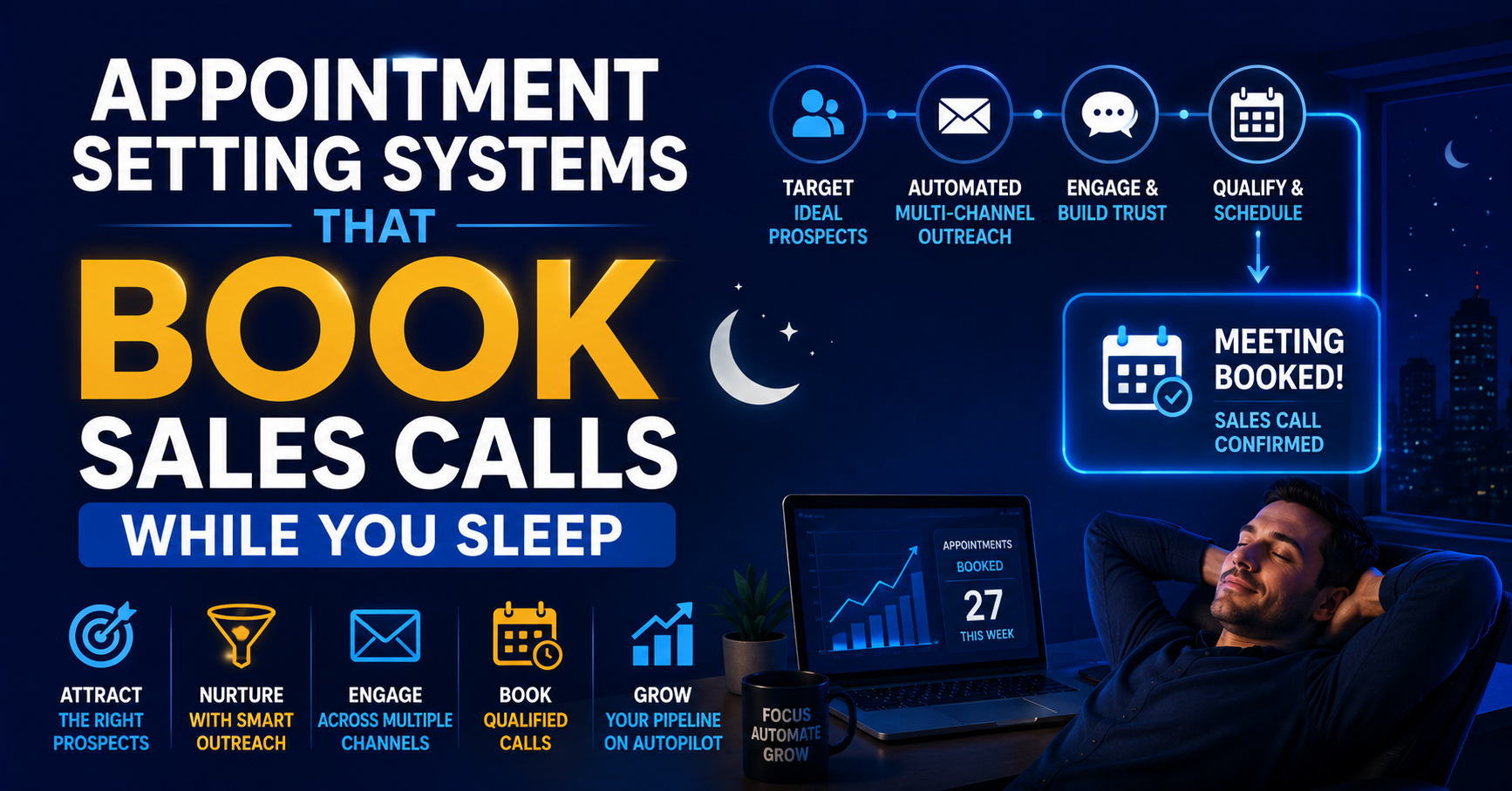
Companies that grow consistently don’t rely on random outreach or occasional campaigns. They build a reliable appointment setting system that runs every day in the background. It generates conversations, books meetings, and keeps your pipeline full, so you wake up to new calls already scheduled.
In this guide, you will learn how to build a system using SDR outsourcing, outbound calling, structured cadences, and CRM workflows to keep your sales calendar full.
Why Most Sales Pipelines Stay Inconsistent
Many B2B companies rely on inconsistent lead generation strategies. They push hard on outreach for a few days, test a campaign, and then stop. Some depend too heavily on referrals or inbound traffic instead of building a steady outbound system.
The result is a predictable cycle:
- Teams get busy closing deals and pause prospecting.
- Eventually, the pipeline dries up.
- Then it’s back to rushed outreach to fill the gap again.
This stop-start approach is exactly why pipelines become unpredictable. A well-structured appointment-setting system solves this by creating consistent daily activity, ensuring outreach, follow-ups, and lead nurturing continue no matter how busy the team gets.
At the end of the day, pipelines grow through consistency, not intensity.
What Is an Appointment Setting System?
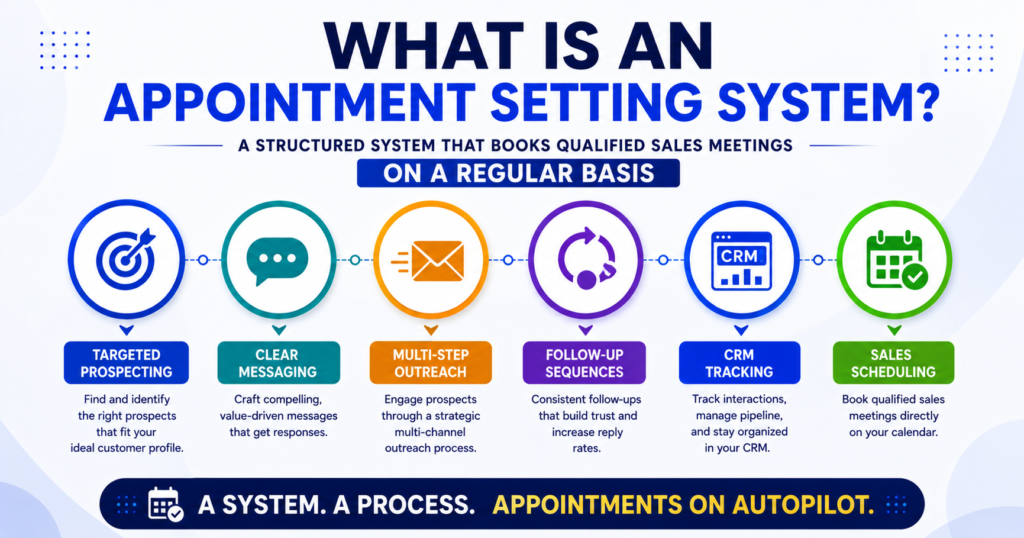
An appointment setting system is a structured process designed to generate and book qualified sales meetings on a regular basis. It is not just about sending cold emails or making calls. It is a combination of:
- Targeted prospecting
- Clear messaging
- Multi-step outreach
- Follow-up sequences
- CRM tracking
- Sales scheduling
When these elements work together, they create a system that runs continuously. Instead of chasing leads manually, the system brings leads to your calendar. For B2B agencies, SaaS companies, and real estate teams, this kind of system becomes the backbone of growth.
The Core Components of a High-Performing System
To build a system that consistently produces sales-ready meetings, you need a few key components working together.
1. A Clear Ideal Customer Profile
Everything starts with targeting.
If you reach out to the wrong audience, even the best scripts and tools will fail. Your ideal customer profile should clearly define:
- Industry
- Company size
- Decision-maker roles
- Location
- Pain points
For example, a SaaS company selling CRM tools might target small to mid-sized businesses with active sales teams.
Clarity at this stage improves response rates and makes outreach more effective.
2. Structured Outreach Cadences
Most prospects do not respond to the first message.
This is why follow-ups are critical.
A well-designed cadence includes multiple touchpoints spread across several days or weeks. It combines:
Emails
- LinkedIn messages
- Outbound calling
- Follow-up reminders
For example, a simple cadence might look like:
- Day 1: Email outreach
- Day 3: LinkedIn connection
- Day 5: Follow-up email
- Day 7: Call attempt
- Day 10: Final follow-up
This structure increases visibility and gives prospects multiple chances to respond.
According to recent sales research in 2026, 80% of sales require at least five follow-ups, yet 44% of salespeople give up after just one
3. Messaging That Starts Conversations
Your outreach message is not meant to close the deal. Its goal is to start a conversation.
So, avoid long, complicated messages and focus on clarity and relevance. Speak directly to the prospect’s problem and show that you understand their situation.
For example:
Instead of saying
“We offer innovative solutions to scale your business”
Say
“We help SaaS teams book 20 to 30 qualified demos every month without hiring in-house SDRs”
Simple, clear messaging performs better.
4. CRM and Tracking Systems
Without tracking, your system breaks. A CRM ensures that every lead, message, and follow-up is recorded. It helps you track:
- Who has been contacted
- Who replied
- Who needs a follow-up
- Which campaigns are performing
Popular tools like HubSpot, Salesforce, or Pipedrive make it easier to manage outreach at scale. A strong CRM setup ensures that no opportunity is missed.
5. Calendar Optimization
Booking meetings is not enough. You must make it easy for prospects to schedule time with you. Use tools like Calendly or integrated scheduling systems that allow prospects to pick available slots instantly.
Make sure your calendar:
- Is easy to access
- Shows clear availability
- Avoids unnecessary steps
The easier it is to book a call, the higher your conversion rate.
The Role of SDR Outsourcing in Scaling Outreach
Building and managing your own SDR team is a time- and resource-consuming task, especially for start-ups. Constructing, training and managing your own SDR team could potentially delay your growth, leading many organizations to consider using outsourced SDR teams as an alternative solution. These firms specialize in appointment setting and lead generation. They already have proven systems, tested scripts, and trained teams ready to deliver results quickly.
Why SDR Outsourcing Works
Outsourcing allows you to scale outreach without building a team from scratch. You get access to trained professionals who focus only on:
- Prospecting
- Cold outreach
- Follow-ups
- Booking meetings
This allows your internal team to focus on closing deals instead of chasing leads.
Faster Results
With SDR outsourcing, you skip the learning curve. Instead of spending months building a system, you plug into an existing one. This means faster pipeline generation and quicker results.
Cost Efficiency
Hiring full-time SDRs can be expensive. Outsourcing allows you to control costs while maintaining performance. You only pay for the output and results, not long-term overhead.
How Outbound Calling Still Drives Results
While many will say that cold calling does not work anymore, the truth is that sales representatives who use outbound calling can still generate large volumes of business through this method. Although emails and messages via LinkedIn can be effective, the immediacy of outbound calling provides direct contact with a prospect.
Why Calls Work
Calls allow you to:
- Build instant connection
- Handle objections in real time
- Qualify prospects quickly
- Move conversations forward faster
A well-timed call can achieve in minutes what emails cannot do in days.
Combining Calls With Other Channels
The best systems do not rely on a single channel.
They combine:
- Email outreach
- LinkedIn engagement
- Outbound calling
This multi-channel approach increases response rates and improves overall performance.
How to Keep Your Sales Calendar Full
The goal of any appointment setting system is simple.
Keep your sales calendar full with qualified meetings.
To achieve this, you need consistency and structure.
Maintain Daily Activity
Outreach should happen every day.
Even when your calendar is full, your system should continue generating new opportunities. This prevents pipeline gaps in the future.
Focus on Quality, Not Just Quantity
Booking meetings is not enough.
You need qualified prospects who are likely to convert. This requires better targeting and stronger messaging.
Monitor and Optimize
Track performance regularly.
Look at:
- Reply rates
- Booking rates
- No-show rates
- Conversion rates
Use this data to improve your scripts, targeting, and cadence.
Common Mistakes That Kill Appointment Setting Systems
Even with the right tools, many systems fail due to simple mistakes.
- Inconsistent outreach is one of the biggest issues. When activity drops, results drop.
- Weak messaging also reduces response rates. If your message does not connect, prospects will ignore it.
- Another common mistake is poor follow-up. Many deals are lost simply because there was no second or third touchpoint.
- Finally, lack of tracking leads to missed opportunities. Without a CRM, it becomes difficult to manage leads effectively.
Avoiding these mistakes can significantly improve your results.
Building a System That Works While You Sleep
The real power of a strong system is automation and consistency. When your appointment setting system is fully set up, it continues to work even when you are not actively involved.
Emails go out automatically. Follow-ups are scheduled. SDRs handle outreach. Calls are booked directly into your calendar. This creates a steady flow of opportunities.
You no longer depend on daily manual effort. Instead, you rely on a system designed to produce results. For founders and sales teams, this changes everything.
Conclusion
Growth doesn’t just happen by accident. It takes structure and the right systems.
When you set up a solid appointment setting process, everything changes. You target the right people, craft clear messages, and build structured follow-ups. With proper CRM tracking and SDR support, your pipeline becomes predictable.
As we move into 2026, sales are no longer about manual hustle alone. It is about building systems that run continuously, scale efficiently, and deliver results without constant effort. The companies that adopt structured appointment setting systems are not just improving their outreach. They are redefining how pipelines are built and how revenue is generated.
This is where Ideaify comes in. With the combination of SDR (Sales Development Representative) outsourcing, already tested and proven outreach systems, and optimized workflows, they turn an inconsistent prospecting approach into a predictable, scalable growth engine. Through outbound execution (reaching out to prospects), CRM-driven tracking, cadence optimization (consistent messaging across touchpoints), and many other aspects of your outreach process along the way, they will be able to keep your pipeline busy and your calendar constantly booked.
The future of selling is not working harder, it’s about developing smarter systems that can perform the selling function for you. The best companies today grow faster, operate more efficiently, and outperform their competition.